Disruption is usually predictable
Blockades, protests and civil unrest are costly — in lost production, damaged relationships and, at worst, injury and loss of life. But they are rarely random. They tend to follow unresolved grievances over land, jobs, compensation, environmental impacts or the conduct of security forces.
The most effective response starts well before a crisis: understanding the drivers of conflict, listening early, and making sure security and community teams work together rather than against each other.
When to engage us
- Rising community tension, repeated grievances or early signs of protest
- Following a blockade, protest or security incident
- Before major changes such as expansion, resettlement, workforce reductions or closure
- Where artisanal or illegal mining overlaps with your tenement
- When public security forces may be deployed near your operation
How we work
Conflict and social risk analysis
We map stakeholders, interests and conflict drivers, and review grievance records, incident history and the role of public and private security.
Engagement strategy
We advise on community engagement and grievance mechanisms that address root causes and build trust over time.
Response planning
Proportionate, rights-respecting protocols for protest and disruption, including escalation thresholds, communication and coordination with public security.
Exercises and training
Scenario-based exercises so site leaders, security and community teams know their roles before an event.
Post-incident review
Independent review after an event to learn, rebuild relationships and reduce the risk of recurrence.
What you receive
- A conflict and social risk assessment
- Community engagement and grievance mechanism recommendations
- A civil disruption response plan aligned with the Voluntary Principles
- Scenario exercise design and facilitation
- Early warning indicators your team can monitor
Relevant experience
- Designed community engagement frameworks that reduced protest-related disruption
- Co-led an ASM and illegal mining mitigation program in Indonesia
- Provided corporate oversight of security operations in conflict-affected regions of Papua New Guinea
- Implemented enterprise crisis management systems across multi-site operations
Contributing to conflict analysis guidance
Understanding conflict dynamics is the starting point for preventing disruption. Mac contributed to the Voluntary Principles Initiative’s conflict analysis guidance for companies:
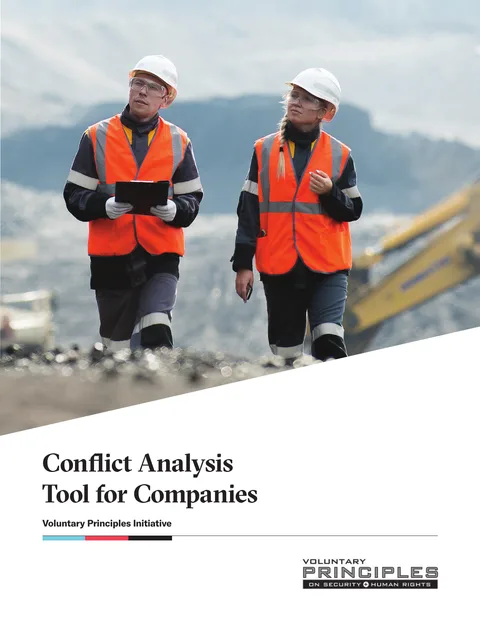
Conflict Analysis Tool for Companies
Helps company staff understand conflict dynamics around their operations, assess their own impact, and reduce human rights and conflict risks.
Developed by the VPI's multi-stakeholder Conflict Working Group. Mac is acknowledged as a contributor and reviewer.
View on voluntaryprinciples.org →Frequently asked questions
Isn't protest response a job for security?
Security has a role, but most disruption is resolved — or prevented — through engagement, not force. We help security and community teams work from the same plan, with security's role kept proportionate and consistent with the Voluntary Principles.
What makes a grievance mechanism effective?
The UN Guiding Principles set out effectiveness criteria: legitimate, accessible, predictable, equitable, transparent, rights-compatible, a source of continuous learning, and based on engagement and dialogue. We assess your mechanism against these and against how communities actually experience it.
Can you help during an active disruption?
Yes. We can provide advice during an unfolding situation, with a focus on de-escalation, protecting people, and coordinating responsibly with public security.
Where have you worked?
Our principal has worked in Australia, Papua New Guinea, Indonesia, India, Tanzania, Côte d'Ivoire, and across North and South America.